Biodegradable Packaging: US Brands’ 2026 Adoption Trends
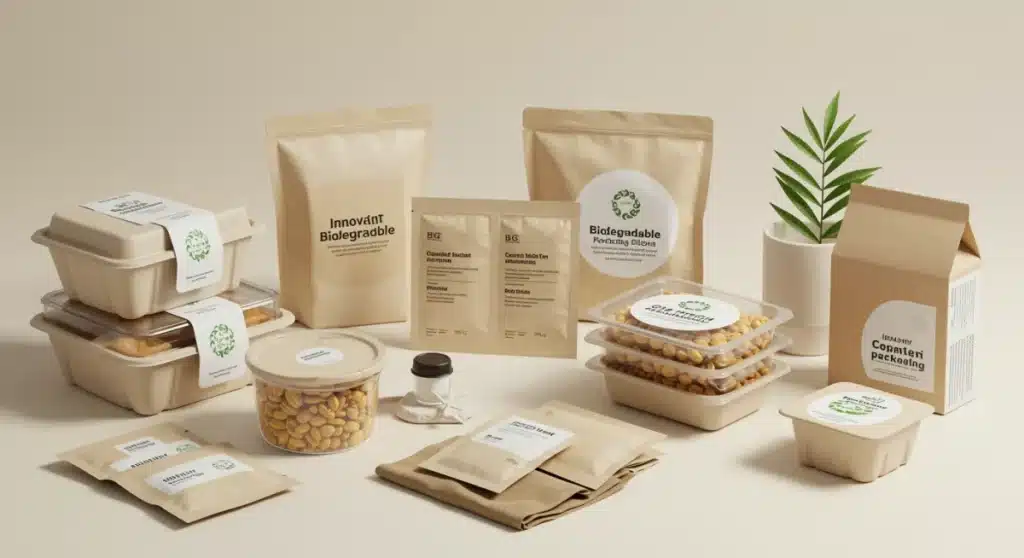
US brands are increasingly adopting advanced biodegradable packaging solutions in early 2026, driven by consumer demand, regulatory pressures, and innovations in materials science to reduce environmental impact and achieve plastic-free goals.
The latest in biodegradable packaging: What US brands are adopting in early 2026 and why
The landscape of consumer goods is rapidly transforming, with sustainability at its core. In early 2026, the discussion around biodegradable packaging trends has shifted from aspirational to operational, as US brands actively integrate cutting-edge solutions into their supply chains. This movement is not merely a marketing ploy; it’s a strategic response to evolving consumer values, stricter environmental regulations, and significant advancements in material science. Understanding these adoptions provides crucial insight into the future of plastic-free commerce.
Driving forces behind biodegradable packaging adoption
The push for biodegradable packaging in the US is multifaceted, stemming from a confluence of consumer demand, legislative mandates, and corporate responsibility initiatives. Brands are recognizing that sustainable practices are no longer an option but a necessity for long-term viability and customer loyalty. This shift represents a significant investment in research and development, aiming to balance environmental benefits with practical considerations like cost and scalability.
Consumer demand and market pressure
Today’s consumers are more environmentally conscious than ever before. Surveys consistently show a strong preference for brands that demonstrate a commitment to sustainability, particularly regarding packaging waste. This growing awareness translates into purchasing decisions, compelling companies to rethink their traditional plastic-reliant models. The market is rewarding innovators who offer genuinely eco-friendly alternatives.
- Increased consumer awareness of plastic pollution’s impact.
- Preference for brands with clear sustainability initiatives.
- Social media amplifying demand for eco-friendly products.
- Gen Z and Millennials driving demand for ethical consumption.
The market pressure extends beyond individual consumers. Retailers are also setting higher standards for their suppliers, often requiring specific sustainability certifications or a commitment to reducing plastic use. This creates a ripple effect throughout the supply chain, pushing manufacturers to innovate faster and more effectively.
Regulatory landscape and legislative mandates
Government bodies across the US are implementing new regulations aimed at reducing plastic waste and promoting circular economy principles. These mandates range from single-use plastic bans to extended producer responsibility (EPR) schemes, which hold brands accountable for the entire lifecycle of their packaging. These legislative changes provide a clear impetus for brands to transition to biodegradable options.
The anticipation of future regulations also plays a significant role. Brands are proactively investing in biodegradable solutions to future-proof their operations and avoid potential penalties or compliance issues down the line. This forward-thinking approach is crucial for maintaining competitive advantage in a rapidly evolving regulatory environment.
Innovations in biodegradable materials: Early 2026 outlook
The early months of 2026 have seen remarkable progress in biodegradable material science, moving beyond simple compostable plastics to more sophisticated, performance-driven alternatives. These innovations are addressing previous challenges related to durability, shelf life, and cost, making biodegradable options more viable for a wider range of products. The focus is now on materials that can genuinely return to nature without leaving harmful residues.
Polylactic acid (PLA) advancements
PLA, derived from renewable resources like corn starch or sugarcane, remains a cornerstone of biodegradable packaging. Recent advancements in early 2026 have focused on enhancing PLA’s heat resistance and barrier properties, making it suitable for more demanding applications, such as hot-fill containers and extended shelf-life products. Blending PLA with other biopolymers is also yielding materials with improved flexibility and strength, broadening its utility.
- Improved heat resistance for hot beverages and meals.
- Enhanced barrier properties for food preservation.
- Blends offering greater flexibility and impact resistance.
- Cost-effective production methods making PLA more accessible.
Cellulose-based and paper alternatives
Cellulose, sourced from wood pulp and other plant fibers, is emerging as a versatile and truly biodegradable solution. Innovations include transparent cellulose films that mimic plastic’s clarity and barrier functions, as well as molded fiber packaging that offers robust protection for electronics and delicate items. These materials are inherently renewable and compostable, aligning perfectly with plastic-free goals.
The development of advanced coatings for paper and board is also critical. These coatings, often plant-based or mineral-derived, provide water and grease resistance without compromising compostability or recyclability, making paper a strong contender for packaging previously dominated by plastic.
Key US brands making the switch and their motivations
Several prominent US brands across various sectors are leading the charge in adopting biodegradable packaging. Their motivations are diverse, ranging from enhancing brand image and meeting corporate sustainability targets to gaining a competitive edge and responding directly to consumer feedback. These early adopters are setting a new standard for industry best practices.
Food and beverage industry leaders
In the food and beverage sector, the urgency to reduce plastic waste is particularly high due to the sheer volume of single-use packaging. Major brands are transitioning to compostable food containers, plant-based bottles, and innovative flexible packaging. For instance, a well-known organic snack brand has fully committed to using home-compostable pouches for its entire product line, citing consumer requests and a desire to align with its natural product ethos.
- Switching to compostable coffee pods and tea bags.
- Using plant-based bottles for juices and dairy alternatives.
- Adopting molded fiber trays for fresh produce.
- Implementing biodegradable films for snack packaging.
Retail and consumer goods innovators
Beyond food, the retail and consumer goods sectors are also seeing significant movement. Apparel companies are experimenting with dissolvable garment bags and mushroom-based packaging for shoes, while beauty brands are introducing refillable systems with biodegradable inserts and plastic-free personal care containers. These initiatives often involve extensive pilot programs and collaborations with material science companies to ensure functional and scalable solutions.
Challenges and opportunities in implementation
While the adoption of biodegradable packaging presents numerous benefits, brands also face significant challenges in its implementation. These include supply chain complexities, infrastructure limitations for composting, and consumer education. However, overcoming these hurdles also presents substantial opportunities for innovation and market leadership.
Supply chain integration and cost considerations
Integrating new biodegradable materials into existing supply chains requires careful planning and investment. Brands must work closely with suppliers to ensure consistent quality, reliable sourcing, and competitive pricing. The initial cost of biodegradable packaging can sometimes be higher than traditional plastics, necessitating a thorough cost-benefit analysis that includes environmental impact and brand value.
However, as production scales and technology advances, the cost gap is narrowing. Furthermore, the long-term benefits of reduced environmental impact, enhanced brand reputation, and compliance with future regulations often outweigh the initial investment, creating a strong business case for sustainable packaging.
Composting infrastructure and consumer education
A critical challenge lies in the availability and accessibility of industrial composting facilities in the US. For truly biodegradable packaging to fulfill its promise, robust composting infrastructure is essential. Brands are increasingly advocating for and investing in improved waste management systems, recognizing that their responsibility extends beyond material selection.
- Limited access to industrial composting facilities in many regions.
- Confusion among consumers about proper disposal methods.
- Need for clear labeling and educational campaigns.
- Potential for contamination if not disposed of correctly.
Consumer education is equally vital. Brands must clearly communicate how to dispose of biodegradable packaging to prevent it from ending up in landfills or contaminating recycling streams. Clear labeling, educational campaigns, and partnerships with waste management organizations are crucial for guiding consumers towards correct disposal practices, maximizing the environmental benefits of these innovative materials.
The future of plastic-free packaging: What’s next?
Looking beyond early 2026, the trajectory for plastic-free packaging points towards even greater innovation and broader adoption. The focus will likely intensify on truly circular solutions that minimize resource depletion and maximize material recovery. This includes advancements in both material science and systemic changes within the packaging ecosystem, driven by collaborative efforts across industries.
Advanced bioplastics and smart packaging
Expect to see further development in advanced bioplastics that offer superior performance characteristics, such as enhanced barrier properties, extended shelf life capabilities, and even self-healing functionalities. Smart packaging, incorporating sensors and indicators, will also become more prevalent, providing real-time information on product freshness and integrity while remaining fully biodegradable. These innovations aim to address complex packaging needs without compromising environmental goals.
Another area of growth will be in packaging designed for specific end-of-life scenarios, such as ocean-degradable materials for products at risk of entering marine environments, and food-soluble packaging that can be consumed or safely dissolved after use. These highly specialized solutions will cater to niche markets and address particular environmental concerns, pushing the boundaries of what is currently possible in sustainable packaging.
Collaborative ecosystems and policy influence
The future success of plastic-free packaging hinges on the creation of collaborative ecosystems involving brands, material scientists, waste management companies, and policymakers. Shared knowledge, joint investments, and unified standards will accelerate the transition away from conventional plastics. Policy influence will also play a crucial role, with governments likely to introduce more incentives for sustainable packaging and stricter penalties for environmental non-compliance.
Embracing a sustainable future: A collective effort
The shift towards biodegradable packaging is a testament to a growing collective commitment to environmental stewardship. As US brands continue to adopt these innovative solutions in early 2026, they are not only responding to current pressures but also actively shaping a more sustainable future. This journey, while complex, is essential for mitigating environmental impact, fostering consumer trust, and ensuring long-term business resilience. The ongoing evolution of materials, infrastructure, and consumer awareness will be key to realizing a truly plastic-free world.
| Key Trend | Brief Description |
|---|---|
| Advanced PLA | Enhanced Polylactic Acid for better heat resistance and barrier properties, expanding its applications. |
| Cellulose Innovations | Transparent films and molded fiber from cellulose offering plastic-like clarity and robust protection. |
| Brand Commitments | Major US food, beverage, and retail brands are fully integrating biodegradable solutions due to consumer and regulatory pressure. |
| Infrastructure Focus | Increased efforts to develop composting infrastructure and educate consumers for effective biodegradable waste management. |
Frequently asked questions about biodegradable packaging
In 2026, “biodegradable” packaging generally refers to materials that can break down into natural components like water, carbon dioxide, and biomass within a specific timeframe, typically under industrial composting conditions. It’s crucial that these materials leave no toxic residues, distinguishing them from traditional plastics that merely fragment into microplastics.
No, not all biodegradable materials are compostable. While both break down naturally, compostable packaging requires specific conditions (e.g., industrial composting facilities) to decompose efficiently and produce nutrient-rich compost. Biodegradable materials might break down in various environments, but not necessarily into useful compost or within a practical timeframe without specific infrastructure.
US brands adopting biodegradable packaging benefit from enhanced brand reputation, meeting consumer demand for sustainability, compliance with evolving environmental regulations, and potential competitive advantages. It also contributes to reduced landfill waste and a lower carbon footprint, aligning with broader corporate social responsibility goals and attracting environmentally conscious consumers.
Challenges include integrating new materials into existing supply chains, managing potentially higher initial costs compared to traditional plastics, ensuring product shelf life and durability, and navigating the limited industrial composting infrastructure in many US regions. Consumer education on proper disposal is also a significant hurdle to overcome.
Consumers can support this shift by actively seeking out products with biodegradable packaging, properly disposing of these materials according to brand instructions and local guidelines, and advocating for improved recycling and composting infrastructure in their communities. Providing feedback to brands about packaging preferences also plays a crucial role.
Conclusion
The rapid adoption of biodegradable packaging by US brands in early 2026 signifies a pivotal moment in the journey towards a more sustainable economy. Driven by informed consumers, proactive legislation, and groundbreaking material science, this transition is reshaping industries from food and beverage to retail. While challenges in infrastructure and cost persist, the collective commitment to innovation and environmental responsibility is paving the way for a future where packaging enhances, rather than harms, our planet. This ongoing evolution is not just about changing materials; it’s about fundamentally rethinking our relationship with waste and embracing truly circular solutions.